

The Gardens
Named after the Scottish word for rocky upland pastures, The Fells is situated on a nearly 1,000-acre hillside overlooking scenic Lake Sunapee. It is the former lakeside summer home of American writer and diplomat John M. Hay (1838-1905). Hay’s son Clarence inherited the property and along with his wife Alice Appleton Hay, transformed the rock pasture into extensive formal and informal gardens. They traveled extensively and the series of formal gardens that they built after visiting Italy and France exhibit the best of the 1920's and 30's garden styles.
The Old Garden
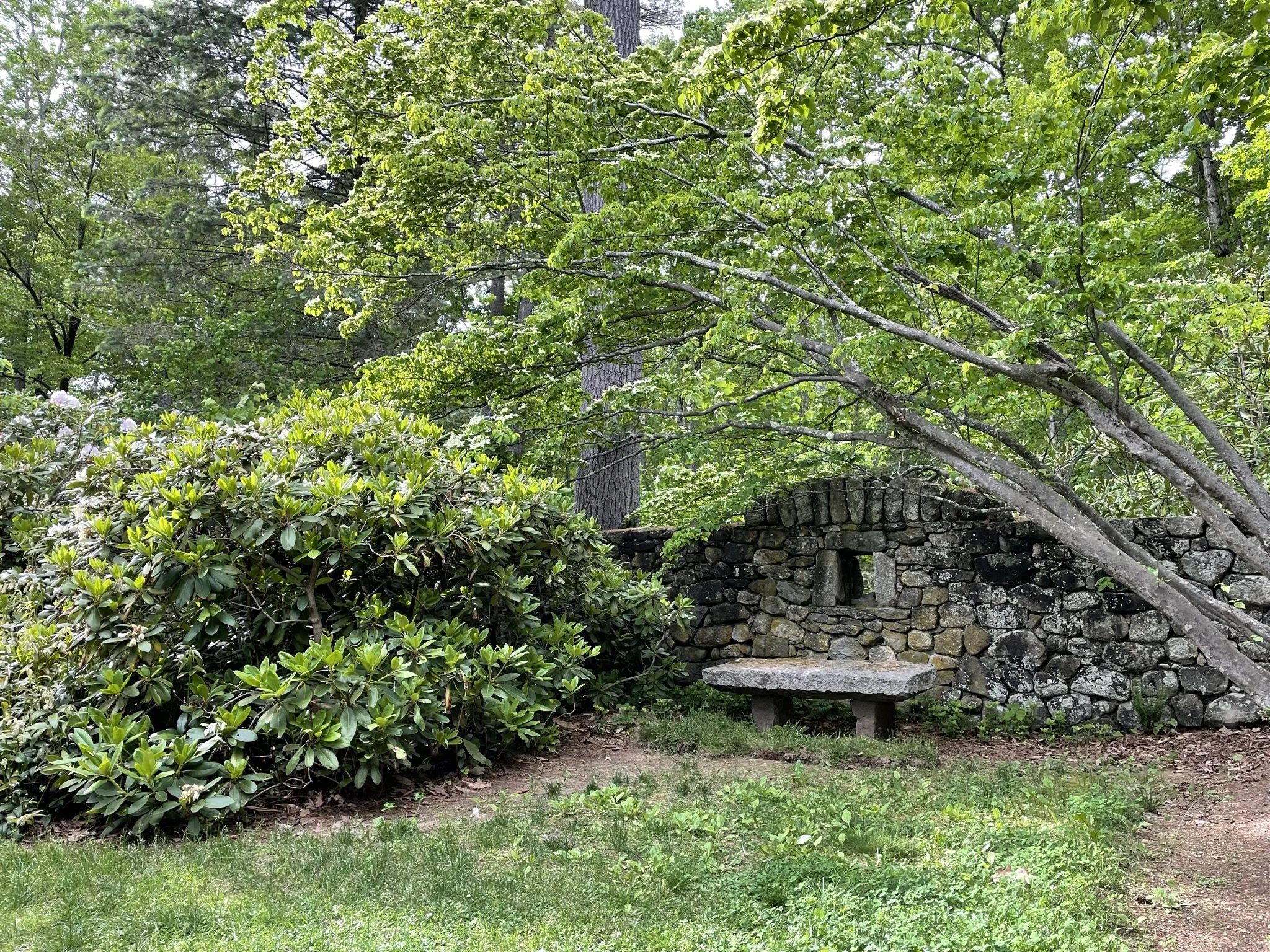
The original garden, a private sanctuary hidden among towering rhododendrons, carpeted with moss and pine needles, adorned with stone walls, trellis, fountain and moss covered stone table and benches.
The “Old Garden” was created by Clarence Hay in about 1909. This was Clarence’s first attempt at a formal garden layout and is in the Colonial Revival architectural style. Thsi walled garden contains a series of three rooms that were originally planted with shrubs, vines, and flower borders. Over the years its character chnaged completely from the original sun-drenched perennial-filled formal axial layout to a cool and shady overgrown area. In 2009, a remarkable restoration that more closely resembles the clean north-south and east-west axes first created by Hay was completed.
The Rose Terrace
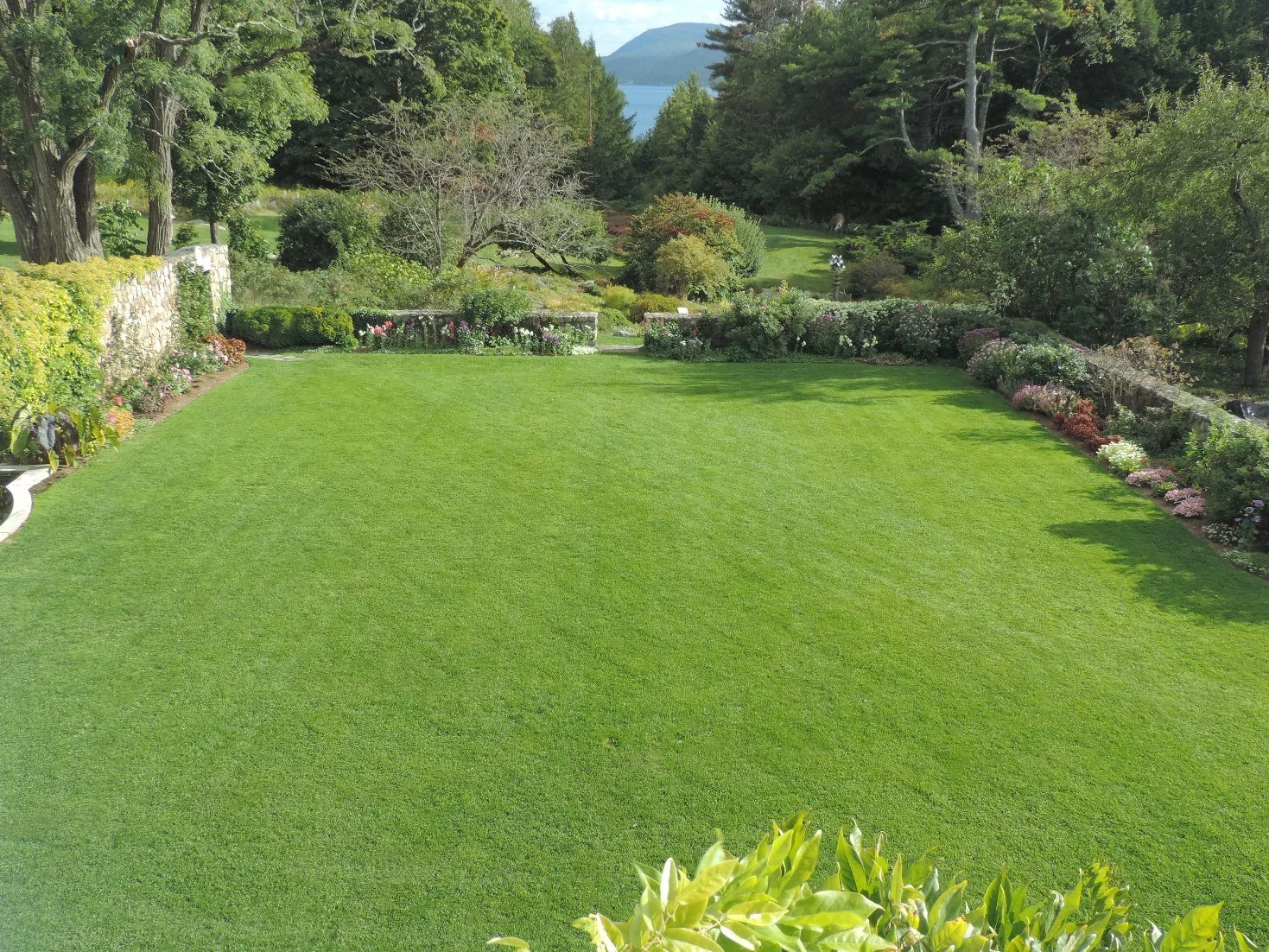
A rectangular shaped level lawn area that overlooks the Rock Garden and Lake Sunapee vista, bordered by the Main House, stone wall with fountain and plantings of unusual annuals, tender perennials, fragrant roses and clematis.
The Rose Terrace was created between 1924 and 1927 and exemplifies the formal garden style favored by Alice Hay. High stone walls and an Italian urn that spills water into a small pool offer a classical focus to the garden. The beds along the south and west walls were originally planted with bush and standard roses, edged with lavender, boxwood, and various annuals. In 1936, tree-form hybrid tea roses were planted in two narrow beds inside the terrace lawn and in 1938, these beds were filled with the pink, white, and blue blooms of petunia roses. These were removed for easier maintenance sometime after 1972.
The Rose Terrace was replanted in June 2000 and now showcases hardy, disease-resistant shrub roses that can be grown easily in northern gardens without the use of chemicals. Hybrid and species clematis climb on the walls and weave through the rose canes.
The Perennial Garden
A 135-foot perennial garden with ever-changing blooms of pink, blue and white.
In 1926, a stone retaining wall and stairs were built off the west side of the house to transform the slope to the lake. The bed was installed and planted with summer blooming perennials, biennials, and annuals in shades of blue, pink, and white.
During its peak in the 1930s, the Perennial Border offered an impressive display of summer blooms, showcasing a predominance of irises, hollyhocks, delphiniums, lilies, and summer phlox. In later years, the depth of the beds was reduced to three feet in order to make maintenance more manageable.
In 1994, this garden was entirely replanted by volunteers, consistent with the original 1930s plan. Historic photographs; interviews with family members, friends, and visitors; and inventories of other similar gardens of the time were used to return the Perennial Border to its former glory.
The Rock Garden
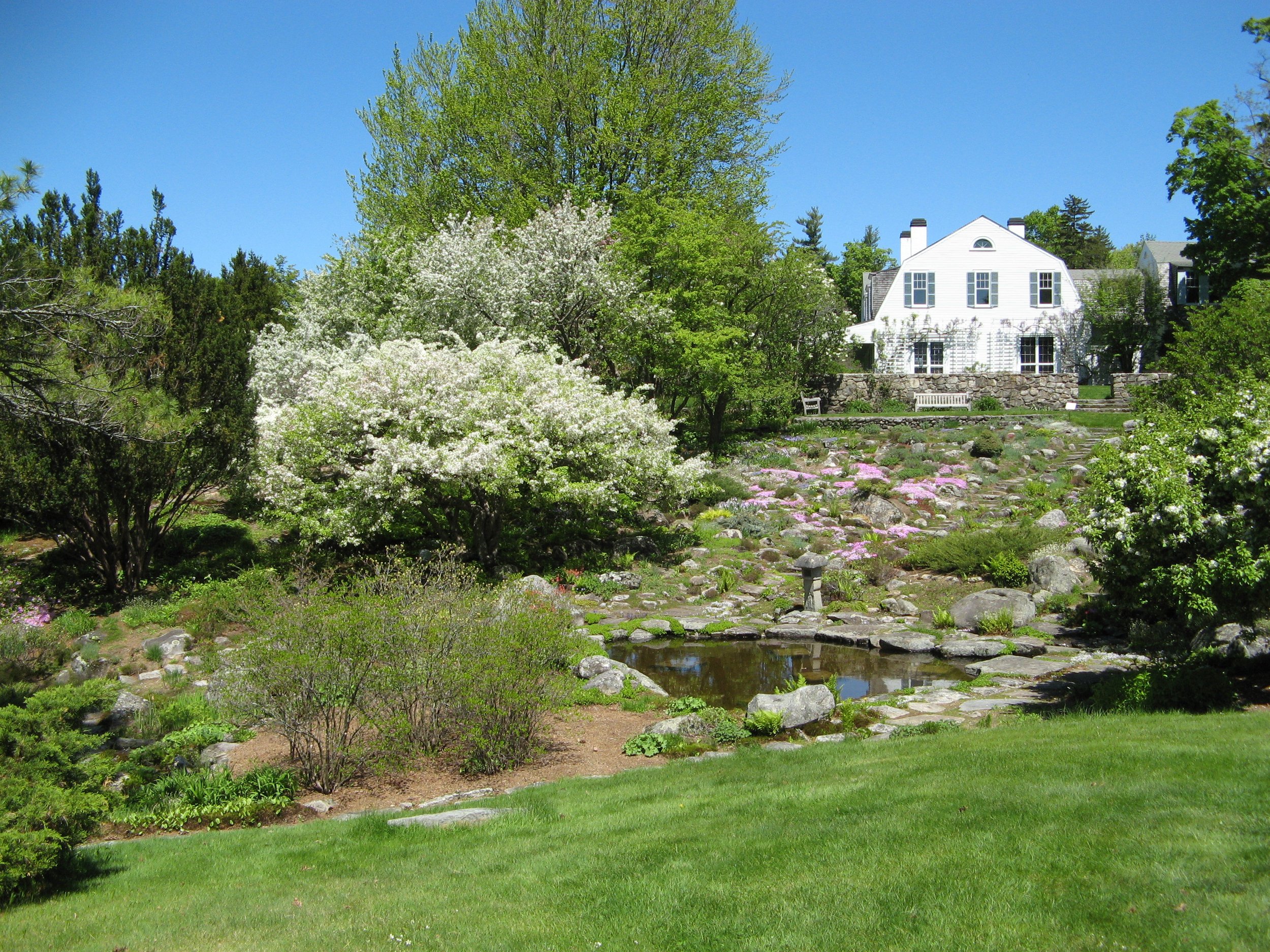
In 1929, Clarence Hay set out to build a rock garden that “is an attempt to represent a very rocky New Hampshire hillside with no flat ledges in evidence.” A team of Italian stonemasons and their four horses hauled weather granite from the top of Sunset Hill and laid the stepping stones under Clarence’s guidance. Running alongside the path, a naturally shaped stream was built (blue line) with flat stones set into clay as its bottom.
Even though it was also called the ‘alpine garden,’ it was never one of truly alpine plants. Clarence’s planting list catalogues over 600 species that were planted over the course of the garden’s construction. There is a rich and diverse mixture of plants from a wide variety of provenances and ecological niches.
Planting, replanting, and replacement was a continual effort by Clarence from the first days of the garden until his death. As the garden continues to be renovated over time, the general goal has been to “garden in the spirit of Clarence Hay,” rather than attempt to establish the exact species that were originally planted.
“This is about a Rock Garden on Lake Sunapee, in the foothills of the White Mountains.”
— Clarence Hay, Gardening with Granite, 1962
Garden Tours
Historic guided tours of the gardens are conducted once daily at 11:00am, Wednesday through Sunday, mid-June through Labor Day weekend and Saturdays and Sundays through Columbus Day. Garden tours are included in the price of admission. The gardens are open during regular hours year-round for self-guided tours and leisurely strolls.
Fairy Village
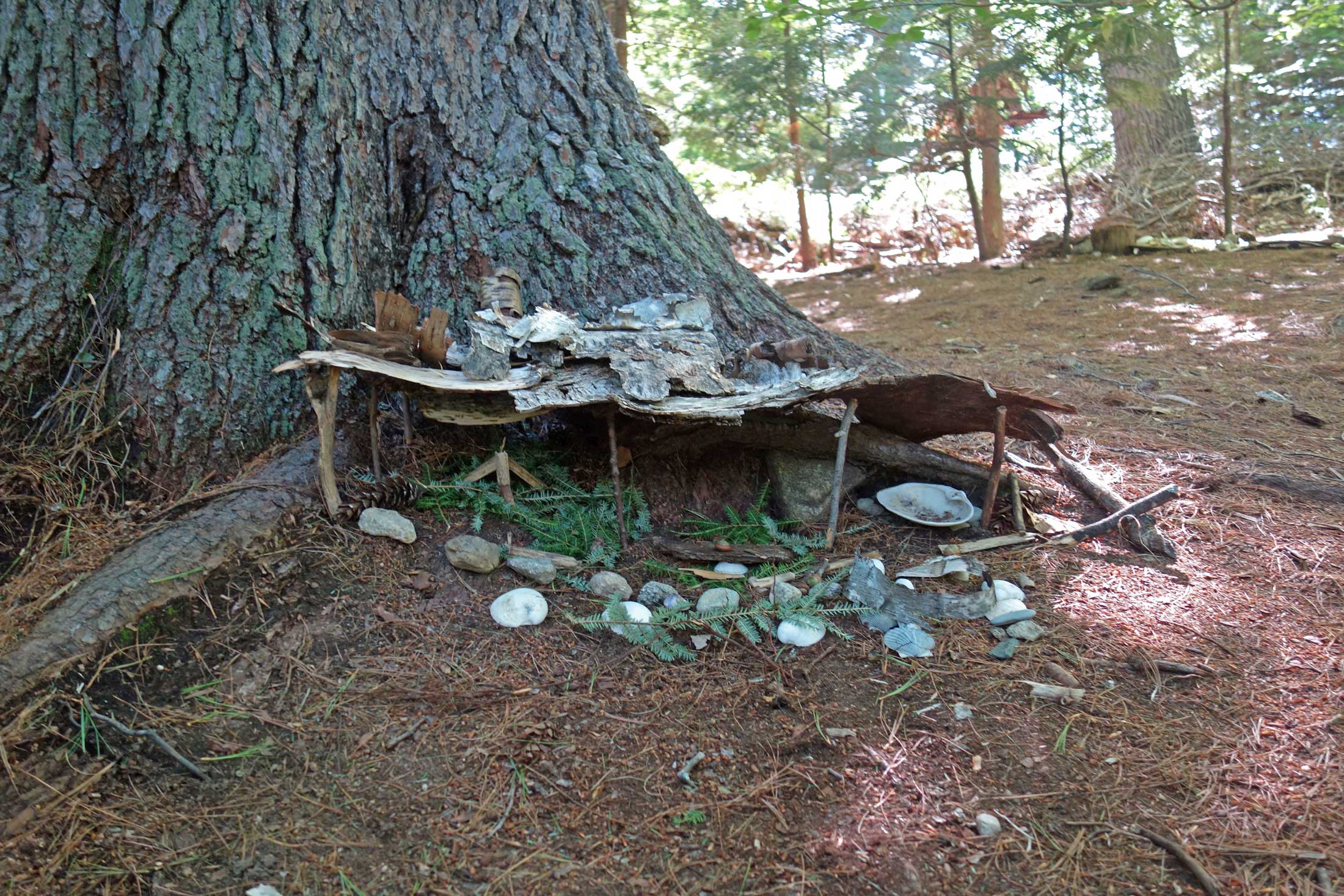
Visit the Fairy Village, tucked in a woodland niche behind the Old Garden–just off the Wildflower Loop–a special place where families connect with nature. For as long as stories have been told, fairies have captured the imagination of the young and young at heart. Many houses make a village, build yours with natural found objects and leave for all–including the woodland fairies–to enjoy.
Lucinda Brockway Presentation
In June 2026, landscape historian Lucinda (Cindy) Brockway stopped by The Fells to give a presentation on the legacy of the Fells gardens and grounds in the context of their times. In the shadow of Mount Sunapee, the Hay family created their own interpretation of the Rustic and the Refined in the rocky pastures and woodlands of former farmland. Here, nature and culture mixed a unique recipe of rare plants and native species within a framework of the Colonial Revival. In this journey we will witness together the unfolding of this very special genius of place.
In 1993, Lucinda Brockway prepared a report for The Fells entitled Cultural Landscape Policies and Philosophies, which was published by the Garden Conservancy. This comprehensive document outlines the history and significance of The Fells landscape; describes key administrative developments, including The Fells’ application to the Garden Conservancy, the formation of the John Hay Historic Landscape Committee, and the Memorandum of Understanding with the U.S. Fish & Wildlife Service; and presents the background, significance, purpose, and treatment priorities for the overall landscape as well as for each individual garden.
Lucinda Brockway is an award-winning expert in landscape preservation, planning, and design with thirty-eight years of experience. She has served as a team member with archaeologists, preservation architects and planners across the country protecting and preserving cultural landscapes and helping non-profits envision innovative new directions for visitor engagement, programming, and interpretation. Past projects include Fort Ticonderoga (New York), Andrew Jackson’s Hermitage (Tennessee), Newport’s Bellevue Avenue estates (private and public), The Glass House (New Canaan CT) and Villa Finale (San Antonio TX). Ms. Brockway’s projects have been the recipient of thirteen awards including recognition by the Garden Club of America, the Federated Garden Clubs of Maine, the Preservation League of New York State, the State of New Jersey, and the Massachusetts Historic Commission.
Ms. Brockway is a past member of the Board of Governors for the Decorative Arts Trust where her role included leading two international study tours to Great Britain. A popular speaker and facilitator, she is currently an instructor for the National Preservation Institute. She is the author of two books and seventeen published articles, and a contributor to the recent publication, Reimagining Historic House Museums (2019). Her work has been featured in Old House Journal, Colonial Homes, Nineteenth Century, and Accent as well as innumerable professional and trade publications. For several years she has served as an expert consultant for USA Today’s 10 Best Public Gardens competitions.